

Businesses that begin construction on a solar project in 2026 can claim a 30% federal tax credit on the total system cost. That covers panels, inverters, wiring, and installation labor. On a $200,000 installation, the credit works out to $60,000, which is why the federal Investment Tax Credit (ITC) remains one of the most valuable financial benefits available to commercial solar buyers, and why it anchors almost every serious conversation about renewable investment today.
Eligibility is where costly mistakes happen. The commercial ITC and the Residential Clean Energy Credit are different instruments. The residential credit, also 30%, applied to qualified property installed from 2022 through December 31, 2025, and it is nonrefundable. It is not available for property placed in service after that date, so a business or homeowner relying on it for a 2026 project is working from outdated guidance. Foreign entity of concern (FEOC) rules, which began on January 1, 2026, add another layer that affects which projects and supply chains qualify.
The sections below cover how the credit is structured, where the commercial and residential rules diverge, and how timing decisions affect your position. Application mechanics vary by project and tax situation, so confirm specifics with a qualified tax advisor and official federal guidance before committing capital.
The Federal Investment Tax Credit: The Core of Corporate Solar Funding

What the 30% Credit Covers
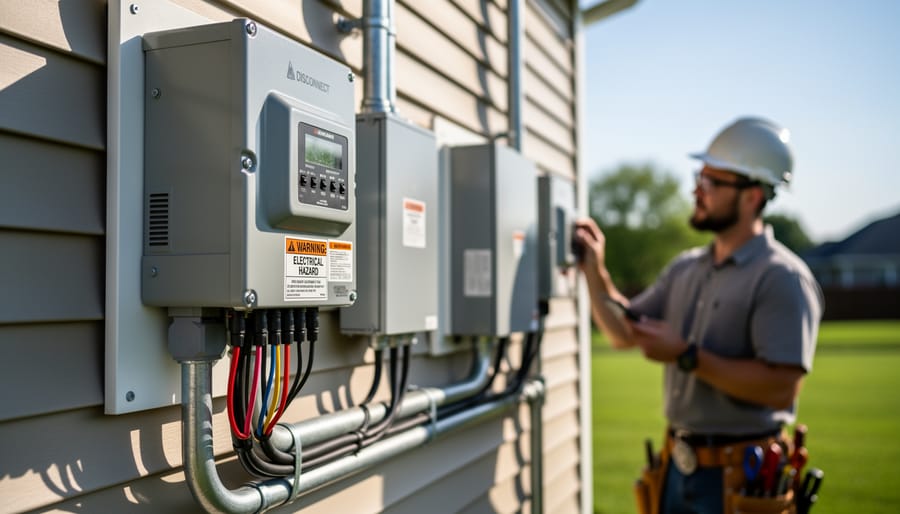
The 30% credit is calculated on the total cost of the system, not on a single line item. Under the research-backed rules for 2026, that cost base includes the panels, the inverters, the wiring, and the installation labor. Each of those pieces is part of what makes a solar array function, and each counts toward the credit.
That breadth matters more than it might first appear. Solar panels are the most visible component, but they are rarely the whole bill. Inverters convert the direct current the panels produce into usable alternating current. Wiring connects the system to the building and to the grid. Labor covers the skilled work of mounting, connecting, and commissioning everything safely. On many commercial projects, these supporting costs make up a substantial share of the final invoice.
Consider the difference between two hypothetical incentive designs. An equipment-only incentive would reward just the hardware, leaving a company to absorb the rest at full price. A credit that reaches wiring and installation labor, by contrast, applies the 30% rate across the full scope of work. That is why the $200,000 installation discussed earlier can generate a $60,000 credit: the figure reflects the system as a whole, not a slice of it.
For corporate finance teams, the practical lesson is to review project quotes line by line. Knowing which categories sit inside the credit helps you compare bids accurately and plan your tax position with realistic numbers. Your tax advisor can confirm how your specific costs are treated.
A Worked Example: The $200,000 System
A concrete example makes the mechanics easier to see. Take a business that begins construction on a solar project in 2026 with a total installed cost of $200,000. The 30% tax credit applies to the full cost of the system, which includes the panels, inverters, wiring, and installation labor. Multiply $200,000 by 0.30 and the result is $60,000 in federal tax credit.
That figure is a credit, not a deduction, and the distinction matters. A deduction only lowers the income on which tax is calculated, while a credit reduces the tax bill itself. Applying the 30% rate to the whole project, rather than to equipment alone, is what makes the number substantial. Labor and wiring, which are easy to overlook when comparing quotes, sit inside the same cost base as the hardware.
Treat the $60,000 as an illustration of the rate, not a guaranteed outcome for any particular company. What a business ultimately realizes depends on its own tax position and on how much of the project’s cost actually qualifies. A system with unusual cost components, or a company with limited tax liability to offset, could see a different result than the headline arithmetic suggests. The verified figures establish the 30% rate and the $200,000 to $60,000 relationship, and nothing beyond that should be assumed.
Before building a financial model around the credit, bring your accountant and tax advisor into the conversation early. They can confirm which costs qualify and how the credit fits your specific filing situation.
Commercial Credit vs. Residential Credit: Why the Distinction Matters in 2026
It is easy to treat “the solar tax credit” as a single program, but in 2026 two separate credits sit behind that phrase, and they no longer overlap in practice. A business weighing solar funding needs to know which one it is actually looking at.
The business Investment Tax Credit applies to companies that begin construction on a solar project in 2026. It equals 30% of the total system cost, covering panels, inverters, wiring, and installation labor. The residential credit works differently and has already reached its end date for new installations.
| Feature | Business ITC | Residential Clean Energy Credit |
|---|---|---|
| Who qualifies | Businesses that install solar | Owners of homes located in the United States |
| Rate | 30% of total system cost | 30% of qualified costs |
| Key timing condition | Construction begins in 2026 | Property installed from 2022 through December 31, 2025 |
| Notable limitation | FEOC rules in effect since January 1, 2026 | Nonrefundable; unavailable for property placed in service after December 31, 2025 |
The residential credit is worth understanding mainly so you can set it aside. The 30% residential clean energy credit covered new, qualified clean energy property for a home, and it is nonrefundable. That means it could reduce a taxpayer’s liability but would not generate a refund beyond what was owed. More importantly for current planning, it is not available for any property placed in service after December 31, 2025.
This matters most for owners of mixed-use or home-based operations. A founder running a business out of a residence, or a property that serves as both a dwelling and a commercial space, may assume the homeowner credit still offers a path forward. For equipment placed in service in 2026 or later, it does not. The business ITC is the relevant program, and the question shifts to whether the project qualifies as a business installation and whether construction has begun.
If your situation straddles the line between residential and commercial use, treat that as a question for a qualified tax advisor rather than something to resolve by assumption. The two credits share the same 30% headline rate, which is exactly why they get confused. They differ in who can claim them, when they apply, and what the claimant can do with the result.
FEOC Rules: What Changed on January 1, 2026

Foreign entity of concern (FEOC) rules began on January 1, 2026, and for any business weighing solar investment, they add a sourcing question that sits alongside the tax credit itself. In practical terms, procurement is no longer a purely commercial matter. Where your equipment comes from, and who sits behind the companies that make and supply it, now deserves a place in the funding plan from the earliest stage.
It is worth being precise about what we can and cannot say here. The research confirms that the rules took effect at the start of 2026. It does not supply the specific compliance thresholds, documentation standards, or consequences that apply, and it would be a disservice to readers to guess at them. Those details can materially affect a project’s economics, which is exactly why they should be confirmed rather than assumed.
That points to a sensible course of action. Before committing capital, bring your tax and legal advisors into the conversation and ask them how the FEOC rules interact with the 30% credit for your particular project. Then put the same questions to your suppliers and installers: what documentation can they provide about the origin and ownership of their components, and are they prepared to stand behind it? A vendor that answers clearly and promptly is usually a better partner than one that does not.
There is also an international dimension. Solar modules and their components move through supply chains that span several continents, so a rule framed around foreign entities inevitably touches cross-border trade. Companies that have built relationships through global solar partnerships may find that familiar sourcing arrangements need a fresh look, even where they have worked well for years.
Timing Your Project: Construction Start and Planning Considerations
Timing is where corporate solar funding plans most often go wrong. The 30% credit hinges on a construction-start milestone: businesses that begin construction on a solar project in 2026 qualify for the credit on the total system cost. That makes the start date a financial event, not just a project-management one. Finance teams should confirm with their tax advisors exactly how “begin construction” is defined and documented for their situation, rather than assuming that signing a contract or placing an order satisfies it.
The residential credit offers a useful cautionary tale. The Residential Clean Energy Credit covered 30% of qualified costs for property installed from 2022 through December 31, 2025, and it is not available for anything placed in service after that date. Policy sunsets are real, and incentives that look stable can disappear on a fixed calendar date. A business that treats today’s credit as permanent is taking on avoidable risk.
Before committing capital, corporate finance teams should ask a few practical questions:
– What event establishes the construction start, and who documents it?
– Does our tax position allow us to use the full credit, given that a $200,000 system could generate a $60,000 credit only if we can absorb it?
– Have suppliers confirmed their documentation in light of the FEOC rules that began on January 1, 2026?
– Are we planning storage or other add-ons alongside the array? If so, it is worth reviewing energy storage options early, since they can affect project scope and sequencing.
One caution: the specific application procedures were not confirmed in the research behind this article, so no step-by-step process is offered here. Consult the official IRS guidance and a qualified tax or legal advisor before you finalize a schedule or commit funds.
Frequently Asked Questions About Corporate Solar Funding
How much is the federal tax credit for business solar in 2026?
Businesses that begin construction on a solar project in 2026 qualify for a 30% credit on the total system cost. On a $200,000 installation, that could mean a $60,000 federal tax credit.
Which costs does the credit include?
The 30% figure applies to the total cost of the system, including panels, inverters, wiring, and installation labor.
Can a business claim the residential credit?
No, that credit is aimed at energy-saving improvements to a home in the United States. It is also no longer available for any property placed in service after December 31, 2025.
Is the residential credit refundable, and what are FEOC rules?
The Residential Clean Energy Credit is nonrefundable. FEOC (foreign entity of concern) rules began on January 1, 2026, so ask your tax and legal advisors how they apply to your equipment sourcing.
Where does the application process fit in? That is the one detail we could not confirm, so we won’t guess at forms or filing steps. Your best path is to consult a qualified tax professional and the official federal guidance for the current requirements before committing capital.
If your company is also weighing smaller solar-powered equipment alongside a larger installation, our buying guide offers a useful companion read on choosing products wisely. Keep in mind that consumer gadgets and a commercial solar system are very different purchases, and the 30% credit discussed here applies to the latter.
Taken together, the picture for corporate solar funding in 2026 is fairly clear. The 30% Investment Tax Credit remains the central lever, and a $200,000 installation that begins construction this year could generate a $60,000 federal tax credit. The residential credit, by contrast, is closed for any property placed in service after December 31, 2025, so it should no longer shape a business’s plans. Layered on top of both is the sourcing dimension introduced by FEOC rules, which began on January 1, 2026 and make supplier questions part of the funding conversation.
Policy in this field rarely stands still. Credits have been extended, reshaped and allowed to lapse before, and the details that matter most, including how to apply, should be confirmed against official guidance. Our publication has followed solar’s financial evolution since 1947, and the lesson holds: track the rules closely, and bring in qualified tax and legal professionals before committing capital.