

The global renewable energy investment landscape has transformed from a niche market into a $500 billion annual enterprise, fundamentally reshaping how capital flows toward climate solutions. Investment companies now serve as the critical bridge between traditional finance and the accelerating energy transition, deploying sophisticated mechanisms ranging from project finance and venture capital to green bonds and infrastructure funds.
Understanding the architecture of renewable energy investment companies requires recognizing three distinct operational tiers. Development-stage investors focus on early-stage technology ventures and project inception, accepting higher risk for potential breakthrough returns. Growth-stage firms target established technologies and operational projects, balancing moderate risk with predictable cash flows. Infrastructure-focused entities acquire mature assets, prioritizing stable, long-term yields that rival traditional utilities.
The investment mechanisms themselves have evolved considerably beyond conventional equity stakes. Power purchase agreements now underpin financing structures, providing revenue certainty that attracts institutional capital. Tax equity partnerships leverage government incentives, while yieldcos package operational assets into publicly-traded vehicles. Green bonds have emerged as a mainstream instrument, channeling fixed-income capital toward renewable projects with unprecedented scale.
For professionals navigating this ecosystem, evaluating investment companies demands scrutiny across multiple dimensions. Track records matter, particularly regarding actual deployment versus committed capital. Geographic focus reveals market expertise and risk tolerance. Technology preferences indicate strategic positioning, with solar and wind dominating portfolios while emerging sectors like hydrogen and energy storage attract speculative capital. Exit strategies and return timeframes separate patient infrastructure investors from profit-focused venture players.
Market dynamics continue shifting as renewable costs decline below fossil fuel alternatives in most regions, transforming renewable investment from a values-driven decision into pure economic logic. This fundamental shift has attracted traditionally conservative institutional investors, pension funds, and sovereign wealth funds, collectively commanding trillions in deployable capital that will define the sector’s next phase.
The Evolution of Renewable Energy Investment Landscape
From Government Subsidies to Market-Driven Capital
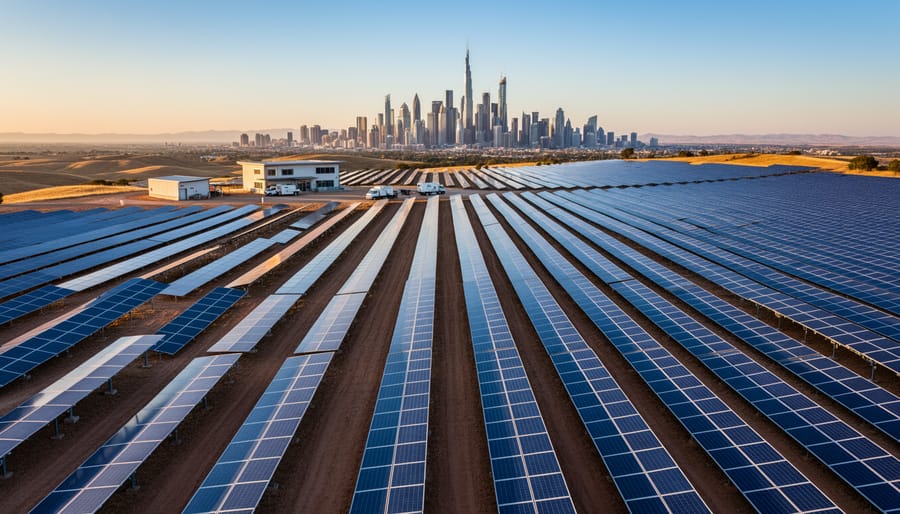
The renewable energy investment landscape has undergone a fundamental transformation over the past two decades. During the early 2000s, government subsidies and policy mechanisms like feed-in tariffs dominated the financing structure, with public funding accounting for approximately 70% of total renewable energy capital in major markets. Germany’s Renewable Energy Sources Act of 2000 exemplified this approach, guaranteeing fixed payments for solar generation and catalyzing early market development.
However, the financial crisis of 2008 marked a pivotal inflection point. As government budgets tightened, private capital began flowing into the sector, recognizing renewable energy’s maturing technology and improving economics. By 2010, private investment had reached parity with public funding in many developed markets. The shift accelerated dramatically between 2015 and 2020 as solar panel costs declined by 89% and wind turbine prices fell 70%, making projects financially viable without substantial subsidies.
Today’s market reflects this maturation. According to BloombergNEF data, private sector investment in renewable energy reached $495 billion in 2022, representing 85% of total capital deployed. Institutional investors including pension funds, insurance companies, and sovereign wealth funds now view renewable assets as stable, long-term holdings comparable to infrastructure investments. The emergence of green bonds, yieldcos, and specialized renewable energy private equity funds has created sophisticated financing instruments unavailable in the sector’s infancy. This competitive, market-driven environment has simultaneously reduced capital costs while expanding available funding sources, fundamentally reshaping how renewable energy projects secure financing.
The Solar Investment Surge: Numbers Behind the Movement
Solar energy continues to dominate renewable investment portfolios globally, capturing approximately 56% of all clean energy capital flows in 2023, representing $380 billion in commitments. This substantial allocation reflects both declining technology costs and improving efficiency metrics, with photovoltaic installations now achieving levelized costs below conventional generation in most markets.
Regional investment patterns reveal distinct strategic approaches. Asia-Pacific led global solar deployment with $195 billion invested, predominantly concentrated in China, India, and emerging Southeast Asian markets. European investment reached $89 billion, driven by energy security concerns following geopolitical disruptions and accelerated net-zero commitments. North America contributed $76 billion, with utility-scale projects and distributed generation both experiencing significant growth.
Comparatively, wind energy attracted $142 billion globally, while emerging technologies including green hydrogen and energy storage collectively received $98 billion. This distribution underscores solar’s maturity as an investment class, supported by proven performance data spanning multiple economic cycles and regulatory environments.
Institutional investors have particularly embraced solar assets, with pension funds and insurance companies allocating record capital to operational projects offering predictable returns. Private equity deployment reached historic levels, focusing on development-stage opportunities across emerging markets where electrification needs intersect with abundant solar resources.
The investment surge reflects fundamental sector transformation, transitioning from government-dependent subsidies toward market-driven economics. Current trajectories suggest solar will maintain its dominant position through 2030, with annual investment potentially exceeding $500 billion as corporations and financial institutions integrate climate commitments into portfolio strategies.
Categories of Renewable Energy Investment Companies
Private Equity and Venture Capital Firms
Private equity and venture capital firms have emerged as critical drivers of renewable energy innovation, particularly in solar technology where risk-return profiles align favorably with growth capital objectives. These investment vehicles typically operate across distinct stages of company maturity, with venture capital firms focusing on early-stage technologies and scaling enterprises, while private equity targets established projects and mid-market companies requiring growth capital or operational restructuring.
Venture capital investment in renewable energy typically ranges from $2 million to $50 million per deal, concentrating on companies developing breakthrough technologies like advanced photovoltaic materials, energy storage solutions, and grid integration software. Notable players include Energy Impact Partners, Breakthrough Energy Ventures founded by prominent technology leaders, and Generate Capital, which pioneered infrastructure-as-a-service models. These firms generally seek equity stakes between 15-40 percent, anticipating exits through strategic acquisitions or public offerings within five to seven years.
Private equity firms operate with larger ticket sizes, often $50 million to $500 million, targeting operational solar farms, wind installations, and companies with proven revenue models. Global infrastructure specialists like Brookfield Renewable Partners and Copenhagen Infrastructure Partners have deployed billions across diversified renewable portfolios. Their investment horizon extends seven to ten years, with exit strategies including secondary sales to institutional investors, utility acquisitions, or asset recapitalization.
The risk-return spectrum varies considerably: venture investments carry higher risk but potential returns exceeding 25 percent annually, while private equity typically targets more predictable 12-18 percent internal rates of return through operational improvements and scale efficiencies. Both approaches have accelerated renewable adoption, channeling over $15 billion annually into the sector globally.
Institutional Asset Managers and Pension Funds
Institutional asset managers and pension funds have emerged as cornerstone players in renewable energy finance, deploying billions of dollars into clean infrastructure projects worldwide. These entities, managing trillions in assets under management, view renewable energy as a strategic allocation that delivers stable, long-term returns while meeting environmental, social, and governance commitments increasingly demanded by stakeholders.
Large pension funds like California Public Employees’ Retirement System (CalPERS), managing over $440 billion, and the Canada Pension Plan Investment Board have established dedicated renewable infrastructure portfolios. Their investment approach typically combines direct project ownership with participation in specialized renewable energy funds. Direct investments allow greater control and potentially higher returns, while fund structures provide diversification and access to specialized operational expertise.
European institutional investors have historically led this space, with Denmark’s PensionDanmark and the Netherlands’ APG Asset Management pioneering large-scale renewable allocations dating back to the early 2010s. These organizations have deployed capital across utility-scale solar farms, offshore wind projects, and energy storage facilities, demonstrating the viability of renewable infrastructure as an asset class.
Insurance companies like Allianz and AXA have similarly committed substantial capital, creating dedicated clean energy investment platforms. Allianz’s renewable energy portfolio exceeds €10 billion globally, spanning multiple continents and technologies.
The appeal for institutional investors centers on renewable energy’s inflation-protected cash flows, typically secured through long-term power purchase agreements, coupled with the sector’s maturation into a lower-risk investment category. These characteristics align perfectly with pension funds’ need to match long-dated liabilities with predictable income streams.
Specialized Green Investment Banks and Funds
Specialized green investment banks represent a transformative approach to financing renewable energy projects, bridging the gap between traditional financial institutions and climate-focused capital deployment. These dedicated entities operate under mandates specifically designed to accelerate the transition to clean energy, often deploying blended finance models that combine public and private capital to reduce investment risk.
Public green banks, established by governments or multilateral organizations, have emerged as crucial catalysts since the early 2010s. The Connecticut Green Bank, founded in 2011 as the first of its kind in the United States, pioneered the model of using limited public funds to leverage substantially larger private investment. These institutions typically offer below-market financing rates, credit enhancements, and technical assistance to make renewable projects viable in emerging markets or underserved sectors.
Private green funds have proliferated internationally, with institutions like Generate Capital and Climate Fund Managers deploying billions toward distributed solar, wind, and energy storage infrastructure. Their blended finance approaches combine concessional capital from development finance institutions with commercial investment, creating risk-adjusted returns that attract institutional investors while maintaining climate impact objectives.
These specialized entities distinguish themselves through patient capital structures, accepting longer payback periods than conventional banks while providing technical expertise throughout project lifecycles. Their emergence reflects growing recognition that renewable energy deployment requires dedicated financial architecture beyond traditional banking models.
Project Finance and Development Companies
Project finance and development companies specialize in structuring complex funding arrangements for individual renewable installations, serving as critical intermediaries between capital sources and project execution. These firms employ sophisticated mechanisms including non-recourse debt, where lenders can only claim project assets rather than the sponsor’s balance sheet if defaults occur, substantially reducing developer risk exposure.
Tax equity structures represent another cornerstone of project finance, particularly relevant in markets offering investment tax credits or production tax credits. In these arrangements, investors with significant tax liabilities partner with project developers, effectively monetizing tax benefits that developers alone might not fully utilize. This mechanism, while complex, has historically driven substantial solar deployment growth since its emergence in the 1990s.
Leading project finance specialists like North Sky Capital, Clairvest, and Generate Capital have developed deep expertise in navigating regulatory frameworks across international markets. These companies typically evaluate projects through rigorous due diligence examining power purchase agreement creditworthiness, resource quality assessments, and construction risk mitigation strategies.
The evolution from family-run development operations to today’s institutionalized project finance reflects the sector’s maturation, with transaction sizes now routinely exceeding hundreds of millions while maintaining the careful project-level analysis that characterized earlier industry pioneers.

Leading Investment Companies Driving Solar and Renewable Growth
Global Infrastructure Giants
The landscape of renewable energy infrastructure investment has been transformed by major institutional players managing multi-billion dollar portfolios dedicated to clean energy assets. These global infrastructure giants operate at a scale that fundamentally shapes market dynamics, bringing both capital depth and operational expertise to renewable projects worldwide.
Brookfield Renewable Partners stands as perhaps the most prominent pure-play renewable infrastructure investor, with over 23 gigawatts of generating capacity spanning hydroelectric, wind, solar, and energy storage facilities across four continents. Founded on principles established decades ago when infrastructure investment was still emerging as an asset class, Brookfield has evolved its approach to prioritize clean energy, demonstrating how traditional infrastructure capital can successfully pivot toward sustainability. Their investment model combines direct ownership of operating assets with development platforms that create future revenue streams, providing investors exposure to both stable cash flows and growth opportunities.
BlackRock, the world’s largest asset manager, has mobilized substantial capital through dedicated renewable energy funds, including the BlackRock Global Renewable Power Fund series that has deployed billions across solar, wind, and other clean technologies. Their infrastructure funds focus on operational assets generating predictable returns, appealing to institutional investors seeking portfolio diversification with inflation-protected characteristics.
Other significant players include Macquarie’s Green Investment Group, which has committed over $8 billion to renewable projects, and Copenhagen Infrastructure Partners, managing approximately €20 billion primarily in wind and solar developments. These entities provide crucial liquidity for large-scale renewable deployment, bridging the gap between project developers and capital markets while bringing sophisticated risk management frameworks that have accelerated the sector’s maturation from niche investment to mainstream infrastructure asset class.
Specialized Renewable Investment Platforms
Several investment firms have distinguished themselves by focusing exclusively on renewable energy and sustainable infrastructure, bringing deep sector expertise and innovative financing approaches to their portfolio companies. These specialized platforms often demonstrate superior understanding of technology risks, regulatory landscapes, and operational considerations compared to generalist funds.
Generate Capital has emerged as a notable player in sustainable infrastructure investment, operating under a unique “Infrastructure-as-a-Service” model. Rather than simply providing equity capital, Generate owns and operates distributed energy assets, allowing customers to access solar, energy storage, and other technologies without upfront capital expenditure. This approach bridges the gap between traditional project finance and venture capital, making renewable installations more accessible to commercial and industrial customers who might otherwise face financial barriers.
Climate Fund Managers represents the specialized focus on emerging markets, where renewable energy deployment faces distinct challenges around currency risk, regulatory uncertainty, and limited local capital. The firm operates targeted funds for regions including Africa, Latin America, and South Asia, combining development finance institution backing with commercial investment to de-risk projects in frontier markets. This regional specialization proves particularly valuable as these markets represent significant growth opportunities yet require nuanced understanding of local contexts.
European specialists like Copenhagen Infrastructure Partners have built substantial track records in offshore wind investment, leveraging proximity to pioneering markets and technical expertise in complex marine installations. Meanwhile, Asia-Pacific focused platforms address the region’s massive renewable capacity additions, understanding local supply chains and regulatory frameworks that differ markedly from Western markets. These regional specialists often provide investors with more targeted exposure than global generalist funds can offer.
Emerging Market Renewable Investors
Emerging markets across Africa, Asia, and Latin America present compelling opportunities for renewable energy deployment, yet face distinct financing challenges that specialized investment companies have learned to navigate. Firms like Norfund, the Norwegian government’s development finance institution, and Africa GreenCo have pioneered innovative approaches to de-risking renewable projects in frontier markets through partial guarantees and long-term power purchase agreements. These investors recognize that developing economies often lack established regulatory frameworks and creditworthy offtakers, requiring patient capital and blended finance structures that combine concessional funding with commercial returns. The International Finance Corporation and regional development banks work alongside private equity firms such as Actis and Berkeley Energy, which have deployed billions across emerging market solar and wind installations. Their strategies typically involve longer investment horizons, local partnerships, and comprehensive capacity-building initiatives that address everything from grid infrastructure to workforce training—reflecting an understanding that sustainable renewable growth in these regions requires more than capital alone.
Investment Mechanisms and Financial Instruments
Direct Equity Investments and Joint Ventures
Direct equity investments represent one of the most substantial commitments renewable energy investment companies can make, typically involving ownership stakes ranging from 10% to 100% in project companies or development entities. Unlike debt financing, equity investors assume greater risk by participating directly in project ownership, positioning themselves to capture potentially higher returns that historically have ranged from 12% to 20% internal rates of return for well-structured solar and wind projects.
These investments take several forms. Pure equity stakes involve acquiring shares in operational renewable facilities or development portfolios, providing capital in exchange for proportional ownership and profit-sharing rights. Joint ventures, alternatively, create partnership structures where investment firms collaborate with experienced developers or operators, combining financial resources with technical expertise. This approach has gained particular traction in international markets where local knowledge proves essential for navigating regulatory frameworks and securing land rights.
Equity requirements vary considerably based on project maturity. Greenfield developments typically demand 30-40% equity relative to total project costs, while operational assets often require 40-50% equity portions due to reduced leverage availability. Investment companies increasingly favor co-investment models, syndicating large projects among multiple equity partners to diversify risk while maintaining meaningful ownership positions that justify active management involvement.
Debt Financing Structures: Senior Loans to Green Bonds
Debt financing remains the cornerstone of renewable energy project capitalization, typically comprising 70-80% of total project costs. At the foundation lie senior project loans, structured as limited-recourse debt secured against specific assets and cash flows. These instruments, pioneered in the 1980s when independent power producers first emerged, offer lenders priority claims while maintaining defined risk parameters. Major infrastructure banks like the European Investment Bank and commercial lenders such as Société Générale routinely provide these facilities at interest rates ranging from 3-6%, depending on jurisdiction and technology maturity.
Corporate debt instruments serve companies with diversified portfolios, allowing renewable energy investment firms to raise capital against their entire balance sheet rather than individual projects. This approach typically yields lower borrowing costs for established operators with strong credit ratings.
Green bonds represent the sector’s most innovative financing evolution, channeling institutional capital specifically toward environmental projects. Since the first issuance by the European Investment Bank in 2007, the market has expanded dramatically, surpassing $500 billion in annual issuances by 2023. These instruments appeal to pension funds and insurance companies seeking environmental, social, and governance alignment while maintaining fixed-income returns.
Yieldcos emerged around 2013 as hybrid structures, combining debt and equity characteristics. Companies like NextEra Energy Partners raised capital by securitizing operational assets, distributing predictable cash flows to investors while maintaining investment-grade credit profiles. This structure proved particularly effective for solar installations with long-term power purchase agreements, offering dividend yields typically between 5-7% while facilitating parent company growth capital recycling.
Tax Equity and Incentive-Driven Investments
Tax equity partnerships have become a cornerstone of renewable energy financing in the United States, particularly within solar markets where upfront capital requirements remain substantial. These structures enable project developers to monetize federal tax incentives they cannot directly utilize due to insufficient tax liability. Investment companies with significant tax appetites partner with developers, providing capital in exchange for tax benefits and project ownership stakes.
The Investment Tax Credit (ITC) and Production Tax Credit (PTC) serve as primary investment drivers, fundamentally shaping project economics. The ITC, traditionally offering 30% of project costs as a tax credit for solar installations, provides immediate value upon project completion. Conversely, the PTC delivers credits based on actual electricity generation over ten years, proving particularly attractive for wind projects. Recent legislation, including the Inflation Reduction Act, has extended and modified these incentives, introducing direct payment options and transferability mechanisms that democratize access beyond traditional tax equity investors.
Understanding these mechanisms proves essential for investors evaluating renewable opportunities, as tax equity structures significantly influence returns, risk allocation, and partnership dynamics across international markets increasingly adopting similar incentive frameworks.
Evaluating Investment Companies: What Developers and Partners Should Know
Track Record and Portfolio Performance
When evaluating renewable energy investment companies, scrutinize their quantifiable track record across multiple dimensions. Begin with deployment history: examine the total megawatts installed, number of projects completed, and geographical distribution of assets. Companies with diversified portfolios across various markets demonstrate resilience and adaptability to different regulatory environments.
Asset performance metrics provide crucial insights into operational expertise. Request data on capacity factors, uptime percentages, and performance ratios compared to industry benchmarks. Top-tier investment partners typically maintain capacity factors exceeding 20% for solar installations and 35% for wind projects. Historical returns on invested capital and internal rates of return offer perspective on financial management capabilities.
Technology-specific experience warrants particular attention. An investment company specializing in utility-scale solar photovoltaics may lack expertise in emerging sectors like floating offshore wind or green hydrogen production. Review their portfolio composition, noting the balance between proven technologies and innovative solutions. Companies with decade-long track records in solar development, for instance, bring invaluable experience navigating technological transitions from crystalline silicon to bifacial modules and energy storage integration.
Finally, examine their exit strategies and investor satisfaction metrics, including follow-on investment rates from existing limited partners, which signal confidence in management’s capabilities.
Investment Criteria and Decision-Making Processes
Renewable energy investment companies employ rigorous evaluation frameworks that extend well beyond traditional financial metrics. The due diligence process typically encompasses technical feasibility assessments, regulatory compliance verification, grid interconnection analysis, and long-term revenue projections based on resource availability and power purchase agreements.
Investment committees generally evaluate opportunities across several key dimensions. Financial viability remains paramount, with investors scrutinizing internal rates of return, debt-to-equity ratios, and projected cash flow stability over project lifespans that often exceed twenty years. For solar projects specifically, investors assess panel degradation rates, inverter reliability, and operations and maintenance cost projections. Technical due diligence involves independent engineering reviews that validate energy production estimates and equipment specifications.
Risk assessment focuses on regulatory stability, offtake agreement creditworthiness, and construction completion guarantees. Companies increasingly incorporate environmental, social, and governance criteria, evaluating community impact, biodiversity considerations, and supply chain transparency. This reflects evolving investor expectations and the growing recognition that sustainable practices enhance long-term value creation.
Timeline expectations vary considerably by investment stage and project scale. Early-stage technology investments may require eighteen to thirty-six months for comprehensive evaluation, while mature project acquisitions can complete within three to six months. Capital deployment schedules typically align with construction milestones, with investors releasing funds in tranches tied to verified completion stages.
The decision-making process often involves multiple stakeholder reviews, including technical experts, financial analysts, and legal advisors. Investment companies with family-run heritage frequently emphasize patient capital approaches, prioritizing sustainable returns over rapid exits, thereby supporting the sector’s transition toward grid parity and energy independence.
Current Trends Shaping Renewable Energy Investment
ESG Integration and Impact Investing Mandates
Environmental, social, and governance (ESG) criteria have fundamentally transformed how renewable energy investment companies allocate capital, moving beyond traditional financial metrics to encompass broader sustainability impacts. This shift reflects growing investor demand for portfolios that align with climate commitments and social responsibility objectives.
ESG integration involves systematically evaluating projects against environmental impact metrics—such as carbon reduction potential and biodiversity protection—alongside social factors including community engagement, job creation, and equitable energy access. Governance standards ensure transparency, ethical management practices, and stakeholder accountability throughout project lifecycles.
Leading investment firms now deploy dedicated ESG frameworks when screening opportunities. For instance, major European pension funds mandate minimum carbon avoidance thresholds, directing billions toward solar and wind projects that demonstrate measurable emissions reductions. Similarly, development finance institutions increasingly tie capital deployment to social impact indicators, prioritizing renewable installations in underserved regions.
The distinction between ESG integration and impact investing warrants clarification: while ESG integration incorporates sustainability criteria into conventional investment analysis, impact investing explicitly targets measurable environmental or social outcomes alongside financial returns. Some renewable energy funds pursue both approaches simultaneously, applying rigorous ESG screens while quantifying specific impacts like gigawatt-hours of clean energy generated or tons of CO2 avoided annually. This dual framework has proven particularly effective in attracting institutional capital from insurance companies, endowments, and sovereign wealth funds seeking to demonstrate climate action leadership.
Technology Diversification Beyond Traditional Solar and Wind
Leading renewable energy investment companies are strategically expanding their portfolios beyond conventional solar photovoltaic arrays and onshore wind installations to capture emerging market opportunities and mitigate technology-specific risks. This diversification strategy reflects a maturing industry where investors recognize that a multi-technology approach enhances long-term returns while supporting grid stability.
Energy storage systems, particularly lithium-ion and emerging solid-state batteries, have become cornerstone investments as they address renewable energy’s intermittency challenge. Major investment firms now allocate substantial capital to standalone storage projects and hybrid renewable-plus-storage facilities, acknowledging that energy storage transforms variable generation into dispatchable power.
Green hydrogen production represents another frontier attracting significant institutional capital. Produced through electrolysis powered by renewable electricity, green hydrogen offers decarbonization pathways for heavy industry, transportation, and energy storage. Investment companies are funding electrolyzer manufacturing facilities and pilot projects across Europe, Australia, and the Middle East.
Offshore wind technology commands premium valuations despite higher capital requirements, with floating offshore platforms opening previously inaccessible deepwater locations. Meanwhile, next-generation solar technologies including perovskite tandem cells and bifacial modules promise efficiency improvements that justify research and development investments. This technological breadth positions forward-thinking investment companies to capitalize on the renewable energy transition’s multiple pathways.

Regulatory Tailwinds and Policy-Driven Investment Opportunities
Recent policy developments have fundamentally reshaped the renewable energy investment landscape, creating unprecedented opportunities for both established firms and new market entrants. The United States Inflation Reduction Act of 2022 represents the most significant climate legislation in American history, allocating approximately $369 billion toward clean energy initiatives through expanded tax credits, manufacturing incentives, and direct investment mechanisms. Investment companies are rapidly repositioning their portfolios to capitalize on enhanced production tax credits and investment tax credits that now cover solar, wind, energy storage, and emerging technologies like green hydrogen.
Similarly, the European Union’s Green Deal, with its ambitious target of climate neutrality by 2050, has mobilized over €1 trillion in sustainable investments over the next decade. This comprehensive framework combines carbon pricing mechanisms with substantial funding programs, particularly benefiting solar deployment across member states. Investment firms are responding by establishing dedicated funds focused on European renewable infrastructure, with particular emphasis on distributed solar systems and grid modernization projects that align with the REPowerEU plan.
These regulatory frameworks have also catalyzed secondary opportunities in manufacturing, supply chain development, and technology innovation, prompting investment companies to adopt more diversified strategies that extend beyond traditional project finance into upstream manufacturing capabilities and downstream grid integration solutions.
Challenges Facing Renewable Energy Investors
Grid Integration and Infrastructure Constraints
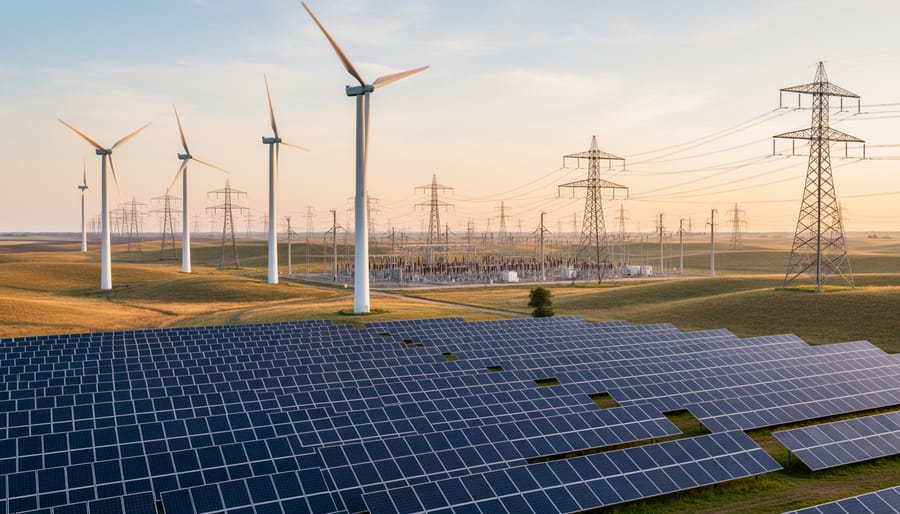
Grid integration remains a critical bottleneck for renewable energy investment companies, with transmission constraints and interconnection delays significantly impacting project economics and expected returns. In the United States, average interconnection queue times have extended beyond four years in some regions, forcing investors to recalibrate financial models and risk assessments. The challenge stems from aging transmission infrastructure designed for centralized fossil fuel generation rather than distributed renewable sources. Investment companies must now factor substantial grid upgrade costs into project budgets, with interconnection expenses sometimes reaching 15-20% of total capital expenditure for utility-scale solar installations. Regional variations are pronounced: European markets generally offer more streamlined interconnection processes through regulatory frameworks developed over decades, while emerging markets in Southeast Asia and Latin America face infrastructure limitations that can delay project completion by years. This reality has prompted sophisticated investors to develop expertise in navigating regional grid operators, securing queue positions early, and partnering with utilities on transmission enhancements. Understanding these infrastructure constraints has become as essential to successful renewable investment as evaluating technology performance or power purchase agreements.
Supply Chain Volatility and Cost Pressures
Recent years have witnessed unprecedented supply chain disruptions affecting renewable energy investment companies, fundamentally reshaping project economics and strategic planning. The pandemic-induced bottlenecks, coupled with geopolitical tensions, have created persistent challenges in securing critical components, particularly polysilicon for solar modules, rare earth elements for wind turbines, and lithium for energy storage systems.
Polysilicon prices exemplify this volatility, fluctuating between $8 and $35 per kilogram during 2020-2023, directly impacting solar project development costs. Such price swings force investment companies to reassess internal rates of return and recalibrate their portfolio strategies. Leading firms have responded by diversifying supplier relationships and extending supply contracts, though these measures increase capital requirements and tie up working capital.
Shipping constraints and container shortages have added 15-25 percent to project timelines in many markets, delaying revenue generation and affecting investor confidence. Investment companies with international portfolios face additional complexity managing currency fluctuations alongside commodity price movements.
This volatility has prompted sophisticated investors to incorporate broader risk premiums into valuation models, typically adding 50-100 basis points to required returns. However, experienced investment companies view current disruptions as transitional challenges rather than fundamental obstacles, recognizing that supply chain normalization and manufacturing capacity expansion will restore more favorable economics. Those maintaining long-term perspectives continue identifying compelling opportunities despite near-term headwinds.
The trajectory of renewable energy investment companies reveals a critical truth: the transition to sustainable power generation cannot succeed through technological innovation alone. Financial institutions, from specialized venture capital firms to multinational development banks, serve as the essential intermediaries translating climate imperatives into operational infrastructure. Their role in mobilizing capital, particularly for solar projects that have demonstrated remarkable cost competitiveness, positions them as architects of the global energy transition.
Understanding this investment landscape equips industry professionals with strategic advantages. Engineers can better align project proposals with investor expectations, developers can identify optimal financing partners for specific deployment contexts, and policymakers can design incentive structures that channel capital effectively. The solar sector exemplifies this dynamic, having attracted over $1.7 trillion in cumulative investment since our publication began documenting this transformation decades ago as a family-run enterprise committed to tracking renewable energy’s evolution.
Looking forward, the financial future of renewable energy reflects both maturation and opportunity. As traditional fossil fuel assets face mounting stranding risks, investment companies increasingly recognize clean energy not merely as ethical portfolio diversification but as fundamental risk management. Emerging markets present particularly compelling opportunities, where solar’s modularity and declining costs enable unprecedented deployment speeds. This convergence of financial sophistication, technological readiness, and urgent climate necessity suggests the next decade will witness exponential growth in renewable energy investment, fundamentally reshaping global energy systems. For professionals navigating this dynamic sector, comprehending the motivations, mechanisms, and trajectories of investment companies provides indispensable competitive intelligence in securing the partnerships that will power tomorrow’s sustainable infrastructure.